

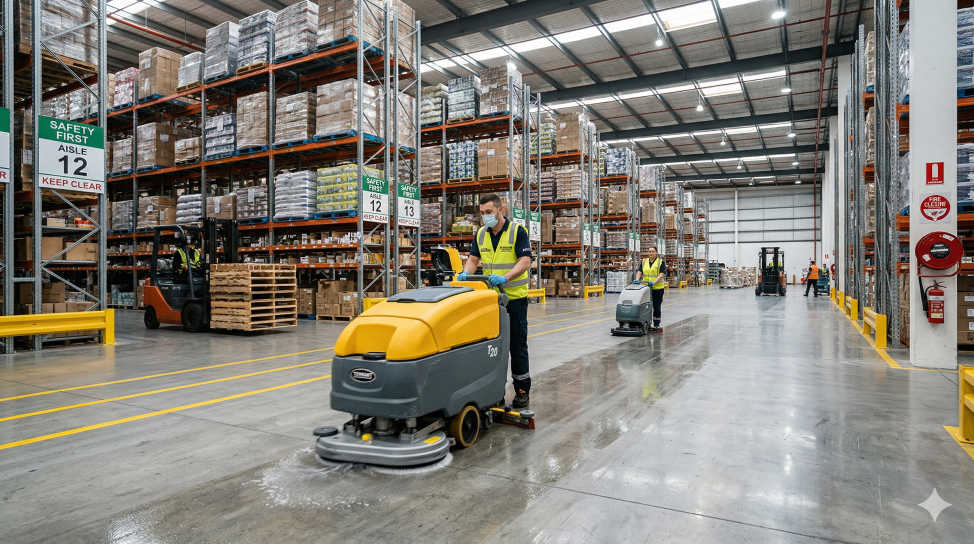
A warehouse is more than a storage space. It is an active work environment that supports inventory, logistics, production, and day-to-day operations. That is why warehouse cleaning plays such an important role in keeping the space safe, efficient, and manageable.
In warehouse settings, dirt, dust, debris, and spills affect more than appearance. They can interfere with equipment, create slip risks, affect air quality, and make operations harder to manage. Professional warehouse cleaning helps reduce these issues by addressing the kind of buildup that routine upkeep may not fully remove.
What Is Warehouse Cleaning?
Warehouse cleaning refers to the cleaning of industrial and storage environments where dust, dirt, debris, grease, and operational residue build up over time. Unlike basic day-to-day tidying, warehouse cleaning focuses on the larger maintenance needs of the facility, including floors, storage areas, loading zones, and other high-use parts of the site.
The goal is not just to make the space look better. It is to support safer movement, cleaner storage conditions, and a work environment that is easier to maintain.
How Warehouse Cleaning Differs from Standard Commercial Cleaning
Warehouse cleaning is different from standard commercial cleaning because the environment itself is different. Offices and customer-facing spaces usually need routine cleaning focused on appearance, shared areas, and daily upkeep. Warehouses often involve larger floor areas, concrete surfaces, high ceilings, shelving systems, loading bays, and heavier buildup.
That is why warehouse cleaning often overlaps with broader industrial cleaning needs, especially in facilities where dust, machinery residue, and heavier contaminants are part of daily operations.
Why Large Industrial Facilities Require Specialized Cleaning
Larger industrial facilities usually deal with more than light surface dirt. Dust can settle on beams, ledges, piping, shelving, and other overhead structures before it falls back into active work areas. Debris can build up in floor corners, traffic lanes, and staging zones. In some cases, the issue is not just routine dirt but a wider maintenance problem that affects how the building functions.
That is one reason some facilities need more specialized support. In buildings with open ceilings, overhead structures, or hard-to-reach upper surfaces, the cleaning scope can start to overlap with issues often seen in high-level cleaning.
What Are Warehouse Cleaning Services?
Warehouse cleaning services are professional cleaning solutions designed for warehouse, storage, and industrial environments. These services go beyond light maintenance and are built around the conditions commonly found in facilities with regular movement, inventory handling, machinery, or heavy foot and vehicle traffic.
Depending on the site, warehouse cleaning services may include:
- floor scrubbing and sweeping
- dust removal from high surfaces
- debris collection
- degreasing in targeted areas
- loading dock cleaning
- equipment-area cleaning
- sanitation of shared work areas
The exact scope depends on the size of the warehouse, the type of activity inside it, and the kind of buildup present.
How Professional Warehouse Cleaning Services Improve Facility Maintenance
Professional warehouse cleaning helps facilities stay in better condition over time. Instead of allowing dirt, grime, and residue to build up until the problem becomes harder to manage, scheduled cleaning helps maintain floors, storage zones, and work areas more consistently.
That can support:
- safer movement through the facility
- cleaner storage conditions
- better day-to-day organization
- reduced buildup around active work zones
- more manageable maintenance overall
When buildup has been left too long, regular cleaning may no longer be enough on its own. In those cases, the situation can begin to overlap with the kinds of problems addressed through heavy build-up cleaning.
When Businesses Should Schedule Warehouse Cleaning Services
There is no single schedule that works for every warehouse. The right cleaning frequency depends on how the space is used.
A busy distribution centre with constant movement, packaging waste, and equipment traffic may need frequent cleaning each week. A lower-traffic storage warehouse may need less frequent deep cleaning in addition to regular upkeep. Facilities with dust-heavy operations, machinery, or sensitive inventory often need a more structured schedule.
The goal is to schedule cleaning before buildup starts affecting safety, workflow, or the condition of the space.
Common Areas That Require Warehouse Cleaning
Different parts of a warehouse collect dirt and residue in different ways, which is why cleaning needs to match the area.
Warehouse Floors and High-Traffic Areas
Floors tend to show the most visible wear. Dust, dirt, tire marks, spills, and debris can build up quickly in traffic lanes, staging areas, and shared pathways. Cleaning these areas helps improve traction, reduce dust movement, and support safer movement throughout the warehouse.
Storage Shelving and Racking Systems
Racking and shelving collect dust over time, especially in warehouses with open ceilings, frequent activity, or dry airborne particles. Dust above eye level can eventually settle onto lower storage areas and products, which is why warehouse cleaning sometimes needs to consider upper-level maintenance as well.
Loading Docks and Shipping Areas
Loading zones bring in dirt and debris from outside and often deal with packaging waste, weather-related mess, and constant movement. Keeping these areas cleaner helps reduce what gets tracked deeper into the facility.
Equipment and Machinery Areas
Machinery zones can collect grease, lint, dust, and residue that should not be left to build up unchecked. In some facilities, keeping those areas clean is part of a broader industrial maintenance effort.
Benefits of Professional Warehouse Cleaning
Professional warehouse cleaning supports more than appearance. It helps the facility function better as a whole.
Improved Workplace Safety
Cleaner floors and clearer aisles help reduce the risk of slips, trips, and avoidable hazards. In a warehouse, even a small amount of debris or residue can become a safety concern quickly.
Better Organization and Efficiency
A cleaner warehouse is easier to manage. Staff can move more efficiently, access storage areas more easily, and spot maintenance issues sooner.
Reduced Dust, Debris, and Contaminants
Dust and loose debris can affect product storage, indoor cleanliness, and equipment areas. Regular cleaning helps prevent that buildup from spreading throughout the space.
Support for Health and Safety Standards
In shared industrial environments, cleaning is part of maintaining a more controlled and workable facility. In some cases, warehouse operations may also need to consider when general cleaning and disinfection serve different purposes, especially in shared work areas, common touchpoints, or staff spaces. That is where it can be useful to understand how professional disinfecting services fit into a broader facility plan.
Methods Used in Professional Warehouse Cleaning
Warehouse cleaning usually involves more than one method. The right approach depends on the layout, floor type, buildup level, and operational needs of the facility.
Industrial Floor Scrubbing and Sweeping
For large floor areas, machine scrubbing and industrial sweeping are common. These methods help remove dust, debris, and surface grime more efficiently than basic manual cleaning.
Dust and Debris Removal from High Surfaces
Overhead pipes, beams, ledges, lights, and rack tops can all collect dust. If these areas are ignored too long, debris often falls back into active work zones, which is why overhead cleaning can become an important part of warehouse maintenance.
Degreasing and Heavy-Duty Cleaning
In warehouses where oils, residue, or industrial grime are common, degreasing may be needed to restore safer walking surfaces and cleaner work areas. This is especially relevant in facilities where dirt goes beyond light daily accumulation.
Sanitizing Shared Workspaces and Equipment
Some warehouse environments also need sanitation of shared workstations, tools, and common-use areas. This is not always the main focus of warehouse cleaning, but it may become part of the wider scope depending on the facility.
Industries That Require Warehouse Cleaning Services
Warehouse cleaning is relevant across many industries because storage and logistics spaces all deal with buildup differently.
Distribution and Logistics Companies
These facilities depend on smooth movement, clear floor space, and safe handling areas. Dust, packaging waste, and tracked-in dirt can interfere with that if not managed consistently.
Manufacturing Facilities
Manufacturing sites often generate residue, particulates, or machinery-related mess that spread into warehouse zones. These spaces may need a mix of warehouse cleaning and broader industrial cleaning support.
Retail Storage Warehouses
Retail storage spaces need to protect goods before they move to stores or customers. Cleaner storage conditions can help reduce dust accumulation on packaging and inventory.
Food Storage and Processing Facilities
In food-related operations, hygiene and buildup control are even more important. Cleaning has to support both daily operations and the condition of the storage environment.
Why Hire Professional Warehouse Cleaning Services
Warehouse cleaning is difficult to manage well with basic in-house tools alone, especially in larger or more demanding environments.
Benefits of Professional Cleaning Equipment
Professional cleaning companies use equipment suited to large industrial spaces, including floor machines, high-reach tools, and heavy-duty systems designed for deeper cleaning.
Maintaining Safety and Compliance Standards
Trained cleaners are better equipped to work around industrial environments, operational schedules, and site-specific safety requirements. That matters in warehouses where cleaning is tied closely to daily function and risk management.
Reducing Operational Disruptions with Scheduled Cleaning
One advantage of professional warehouse cleaning is that it can often be scheduled around operating hours or lower-activity periods. That makes it easier to maintain the facility without creating unnecessary disruption.
For some businesses, warehouse cleaning also fits into a broader facility support model through providers such as Canadian Expert Cleaning and Work Clean, especially when businesses manage multiple sites or need wider cleaning support beyond one warehouse alone.
Warehouse Cleaning for Ongoing Facility Maintenance
Warehouse cleaning works best when it is treated as part of ongoing facility maintenance rather than a one-time response to visible dirt. The longer dust, debris, and residue are allowed to build up, the harder they become to manage.
For many facilities, the right cleaning approach depends on practical questions like:
- how much traffic moves through the site each day
- what kind of residue or debris is most common
- whether the warehouse includes open ceilings or overhead structures
- whether machinery areas need deeper cleaning support
- how often buildup starts affecting operations
Those factors help shape a cleaning plan that matches the facility instead of applying the same schedule to every site.
Final Thoughts
Warehouse cleaning is an important part of maintaining a safe, efficient, and workable industrial environment. In warehouses, dust, debris, spills, and residue affect more than appearance. They can influence safety, organization, maintenance, and the way the facility functions day to day.
That is why warehouse cleaning often needs a more specialized approach than standard commercial cleaning. The larger the space and the heavier the activity, the more important it becomes to clean proactively rather than wait for buildup to become a larger issue.
If your facility needs support with warehouse cleaning or broader industrial cleaning, you can get a quote.
Recent Comments