

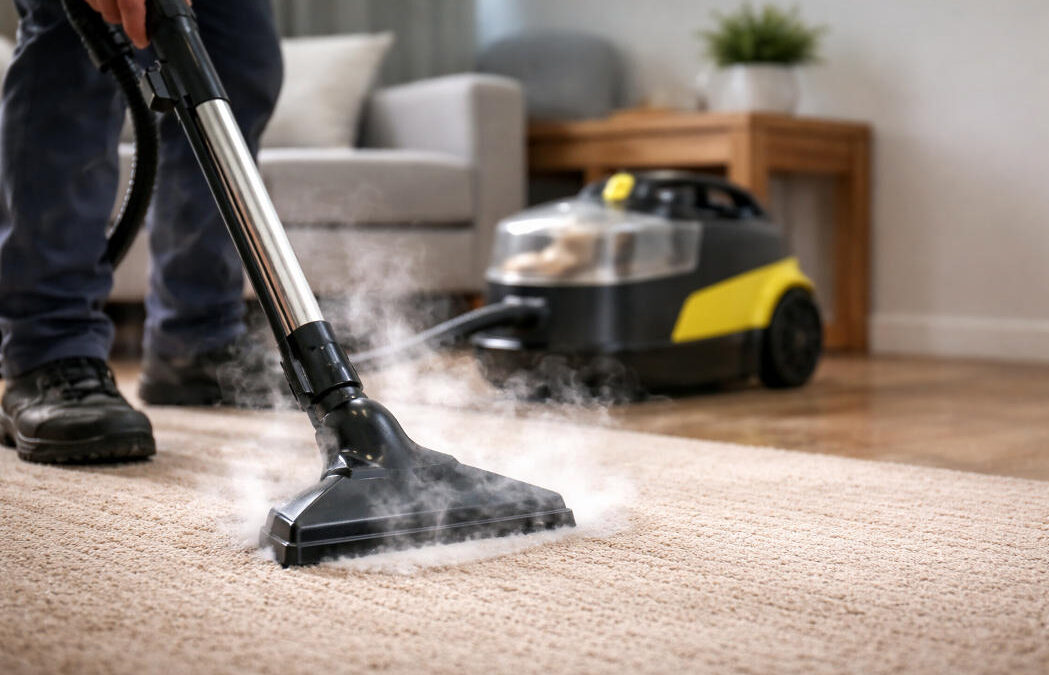
Steam cleaning is widely used for deep cleaning because it combines heat and moisture to loosen dirt, grease, and buildup from surfaces. It is often used in both homes and commercial settings to clean areas that are difficult to tackle with basic wiping, mopping, or scrubbing alone.
If you have ever wondered what steam cleaning is, how it works, and where it is most useful, this guide breaks it down clearly.
What Is Steam Cleaning?
Steam cleaning is a cleaning method that uses heated water vapor to help loosen soil, grease, residue, and other buildup from surfaces. The heat helps break down contaminants, while the moisture helps lift them so they can be wiped away or extracted, depending on the surface and equipment being used.
It is commonly used for deep cleaning because it can reach into textured surfaces, tight areas, and buildup that regular cleaning may leave behind.
How Does Steam Cleaning Work?
Steam cleaning works by heating water until it produces steam, which is then applied to a surface through specialized equipment. The heat softens and loosens dirt, grease, and stuck-on residue. Once the buildup is lifted, it can be removed more easily through wiping, agitation, or extraction.
One reason steam cleaning is so effective is that it does more than clean the surface visually. It helps break down grime in areas that are harder to clean by hand, including grout lines, textured materials, fabric surfaces, and hard-to-reach corners.
Depending on the job, steam cleaning may be used on its own or alongside other cleaning methods.
Why Steam Cleaning Is Often Used for Deep Cleaning
Steam cleaning is often chosen for deep cleaning because it helps tackle buildup that standard cleaning methods may not fully remove. A quick wipe or mop can help with surface-level mess, but it usually does not do much for grease, embedded dirt, or residue that has built up over time.
That is where steam cleaning becomes useful. It is often used when the goal is not just to tidy a space, but to clean it more thoroughly.
Common reasons people choose steam cleaning include:
- loosening stubborn dirt and residue
- cutting through grease and grime
- refreshing heavily used surfaces
- cleaning textured or porous areas more effectively
- reducing reliance on heavy chemical use in some situations
Common Uses for Steam Cleaning
Steam cleaning can be used across a wide range of residential and commercial cleaning tasks. The exact use depends on the surface, the level of buildup, and the type of equipment being used.
In homes
Steam cleaning is often used for:
- tile and grout
- bathrooms
- kitchen surfaces
- upholstery
- certain rugs and carpets
- hard-to-clean corners and edges
- move-in and move-out deep cleaning
For homeowners looking at broader residential cleaning services, steam cleaning is often one part of a more detailed approach to kitchen, bathroom, and surface cleaning.
In commercial spaces
Steam cleaning is often used for:
- washrooms
- breakrooms
- kitchens
- entry areas
- seating and upholstered furniture
- tile floors and grout
- high-use surfaces that collect grease or buildup
In workplaces, it can also support broader office cleaning services when deeper cleaning is needed in shared and high-traffic areas.
Benefits of Steam Cleaning
Steam cleaning is popular for a reason. It offers several practical benefits when used correctly and on the right surfaces.
1. It helps loosen stubborn buildup
Steam is especially useful for grease, stuck-on residue, soap scum, and dirt that has settled into textured surfaces.
2. It supports more detailed cleaning
Because steam can reach into edges, seams, grout lines, and other narrow areas, it can help with jobs that are hard to do thoroughly by hand.
3. It can reduce the need for harsh chemicals
In some cleaning situations, heat and moisture do a lot of the work. That can reduce how much chemical product is needed, depending on the surface and the type of buildup.
4. It works across different settings
Steam cleaning is used in both homes and businesses, which makes it a flexible option for a variety of deep cleaning needs.
5. It helps refresh heavily used areas
Spaces that collect repeated buildup over time often respond well to steam cleaning, especially kitchens, bathrooms, tile surfaces, and upholstered materials.
What Surfaces Can Be Steam Cleaned?
Steam cleaning is versatile, but it is not one-size-fits-all. Some surfaces handle steam well, while others need more caution.
Common surfaces that may be suitable for steam cleaning include:
Tile and grout
Steam can help loosen dirt and buildup from grout lines and tiled surfaces, especially in kitchens and bathrooms.
Bathroom surfaces
Steam is often used on tile, around fixtures, shower areas, and places where soap scum and moisture buildup are common.
Kitchen surfaces
It can be useful for breaking down grease and residue on certain kitchen surfaces, depending on the material and the cleaning objective.
Upholstery
Some upholstered furniture can be steam cleaned to help lift dirt and refresh the fabric, though fabric type should always be considered first.
Certain carpets and rugs
Some carpet and rug cleaning methods involve steam or hot water extraction, but the best approach depends on the material, level of soiling, and cleaning goal. For more surface-specific treatment, professional carpet cleaning may be the better fit.
When Steam Cleaning May Not Be the Best Choice
Steam cleaning is effective, but it is not right for every material or every problem. Some delicate surfaces, unsealed materials, or heat-sensitive finishes may not respond well to steam. In other cases, a different cleaning method may be more appropriate depending on the type of buildup.
That is why surface type matters. The cleaning method should match the material, not just the dirt.
It is also important not to treat steam cleaning as a substitute for every hygiene-related service. In some settings, deeper cleaning and disinfection serve different purposes. Where a space requires targeted microbial control, professional disinfecting services may be a more appropriate or complementary solution.
Steam Cleaning vs Traditional Cleaning
Traditional cleaning methods like wiping, sweeping, and mopping are useful for routine upkeep. They help keep surfaces manageable day to day. But they are not always enough for deeper buildup.
Steam cleaning is different because it focuses more on loosening and lifting what has built up over time.
Traditional cleaning is often better for:
- regular day-to-day maintenance
- quick surface cleaning
- light messes and spills
Steam cleaning is often better for:
- deep cleaning tasks
- grease and residue buildup
- textured surfaces
- detail-focused cleaning
- areas that need more than a basic wipe-down
The two methods are not really competitors. In many cases, they serve different purposes.
Steam Cleaning for Homes
In residential spaces, steam cleaning is often used when regular cleaning no longer feels like enough. That might mean buildup in the bathroom, grease in the kitchen, dingy grout, or upholstery that needs more than vacuuming.
Homeowners often look into steam cleaning when:
- preparing for guests
- doing seasonal deep cleaning
- cleaning after renovations
- handling buildup in kitchens and bathrooms
- refreshing a home before moving in or out
Steam Cleaning for Businesses
In commercial spaces, steam cleaning is useful because some areas take on repeated daily wear. Floors, washrooms, staff areas, seating, and customer-facing spaces can all collect buildup that basic cleaning may not fully address.
Businesses may use steam cleaning as part of:
- detailed periodic cleaning
- restroom and breakroom upkeep
- kitchen and food-area cleaning
- upholstery and seating refreshes
- presentation-focused cleaning for customer-facing spaces
It is often most useful in environments where surfaces need to look maintained and be cleaned thoroughly on a regular basis.
For companies managing larger facilities, steam cleaning may sit alongside janitorial and maintenance programs such as janitorial cleaning services or broader commercial cleaning support through Work Clean and Canadian Expert Cleaning.
Why Professional Steam Cleaning Can Make a Difference
Consumer steam cleaners can be useful for light household tasks, but professional equipment and experience usually matter more for larger jobs, heavier buildup, or more sensitive surfaces.
Professional steam cleaning may offer:
- stronger and more consistent equipment
- better handling of different materials
- more thorough cleaning for large or heavily used areas
- better results on buildup that has been there for a while
Just as important, a professional cleaner can decide when steam cleaning is the right method and when another method would be better.
Final Thoughts
Steam cleaning is an effective deep cleaning method because it helps loosen buildup, refresh surfaces, and support more detailed cleaning in both homes and businesses. It is especially useful for grease, grime, textured surfaces, and areas that need more than routine maintenance.
Like any cleaning method, it works best when matched to the right surface and the right cleaning goal. Used properly, it can be a practical option for deeper cleaning without relying heavily on harsh products or aggressive scrubbing.
If you are looking for professional steam cleaning services for a home, workplace, or commercial setting, you can get a quote here.
Recent Comments